Showing posts with label RPG Design. Show all posts

Monday, October 29, 2018

RPG Design: Hit Points

This week, I wanted to touch on an issue that comes up in almost every RPG: a PC's health.



Hit Points are by far the most popular method of indicating PC health. Examples of RPGs with Hit Points include D&D, Call of Cthulhu, and most other RPGs.

By "Hit Points," I mean a numerical measure of the amount of damage a PC can sustain before death or incapacity.  

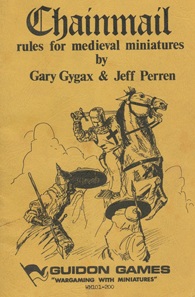
Hit Points have been in RPGs since the beginning of the hobby, being an innovation of Dave Arneson in his Blackmoor campaign.  Some people might argue that Hit Points started with Chainmail, but Chainmail's system of "Hits" was different and didn't really track to the man-to-man scale.

What Hit Points are supposed to represent is a topic of debate to the present.  Gary Gygax notes in AD&D's PHB:

"Each character has a varying number of hit points, just as monsters do. These hit points represent how much damage (actual or potential) the character can withstand before being killed. A certain amount of these hit points represent the actual physical punishment which can be sustained. The remainder, a significant portion of hit points at higher levels, stands for skill, luck, and/or magical factors. A typical man-at-arms can take about 5 hit points of damage before being killed. Let us suppose that a 10th level fighter has 55 hit points, plus a bonus of 30 hit points for his constitution, for a total of 85 hit points. This is the equivalent of about 18 hit dice for creatures, about what it would take to kill four huge warhorses. It is ridiculous to assume that even a fantastic fighter can take that much punishment.The some holds true to a lesser extent for clerics, thieves, and the other classes. Thus, the majority of hit paints are symbolic of combat skill, luck (bestowed by supernatural powers), and magical forces."

However, Gygax ignores an issue that he indirectly brings up, namely that that 10th level fighter with 85 hit points, will only recover, as per the DMG, 1 hp per day of rest (for the first week and then perhaps a bit more later), which doesn't make sense if "the majority of [the 85 hit points] are symbolic of combat skill, luck (bestowed by supernatural powers), and magical forces".

Nevertheless, for D&D's abstract combat system, Hit Points are a quick and intuitive way to tracking a PC's health.  In that kind of system, Hit Points also add tension and drama to combat, escalating with every hit.  At least up to a point, as a PC with too many Hit Points raise game balance issues.

For example, that 10th level fighter with 85 hit points is a literal tank who can singlehandedly wipe out a small army.


Hit Points don't work as well for less tactical games, such as New School RPGs with story game elements.  For example, Ten Candles has no Hit Points since a PC's health is determined narratively.  This is also why Dungeon World, a New School game that apes Old School conventions, severely reduces the chance that a PC fails a roll.

Hit Points also obviously don't work for non-combat games, such as Golden Sky Stories.

Monday, September 24, 2018

RPG Design: Non-Human PCs

This week, I wanted to touch on an important related design issue that is very hard to do well, Non-Human PCs:


This isn't really a concern for my rule set, being Swords & Sorcery-themed and, unsurprisingly, humanocentric.  However, Non-Human PCs being believable are a concern for any RPG that incorporates High Fantasy and/or Science Fiction elements, which is a whole boatload of them- everything from D&D to Shadowrun to Star Wars.

Of course, what constitutes "believable" depends upon the level of immersion that the RPG purports to have.  For example, for B/X D&D's simplified rules set, where Demi-Humans are effectively the "multi-class option," as Race-as-Class mostly works.

However, for deeper levels of immersion, a lack of believability can be a problem for those who value verisimilitude.  As a world building task, it's quite hard work to develop a truly alien mind set, belief system, culture, history, etc.

Consequently, most RPGs (and other media) cut corners.  In High Fantasy, Non-Human species are typically the Tolkien standards, blatant Tolkien ripoffs or weird monocultures such as Scottish Dwarves.  Science Fiction is even worse, where most aliens are just Aliens with Forehead Ridges.


One of the few RPGs to do Non-Humans right is 2300 AD (originally titled Traveller: 2300, as the game as supposed to be a prequel to Traveller), from the genetically-engineered Pentapod to the vicious Kafers (a name based on the German word Käfer, meaning "beetle").  Culture, motivations and otherness are all done well and add to the aliens' strangeness.

The game is definitely worth a look to see how GDW handled the Non-Humans, as well as interesting relatively hard Science Fiction world building in general.  Except for having France be the reigning superpower, which shatters suspension of disbelief.


Being creative is hard, so the state of Non-Human PCs in RPGs is somewhat understandable.  However, sometimes avoidance is the best strategy (*cough*Swords & Sorcery*cough*).


Monday, September 10, 2018

Design Philosophy, Revisited

So, it's been a couple years since I started this blog, and with the first public playtest of my rules set, Sorcery & Steel, under my belt, I thought it would be a good time to look back and see how S&S matches up thus far to my stated Design Philosophy.

As I mentioned earlier, with Sorcery & Steel, I want to create an "Old School" (e.g., traditional GM authority, player skill over character skill, Combat as War, etc.) rules set that combines "enough" interesting tactical options with also "reasonably" fast speed of play (i.e., a rules set that achieves Old School-style Tactical Depth at relatively low cost in terms of Complexity).  Here, "enough" and "reasonably" reflect my opinion and YMMV.


Overall, I'm pretty satisfied with how Sorcery & Steel is coming along.  In order to be an Old School game with both tactical depth and streamlined gameplay, I front-loaded a lot of the mechanical crunch, especially into Character Creation/Character Advancement.  However, as one of my players put it, once you finish making a PC and understand the basic gist of the game, it generally runs very smoothly.

Also, speaking of Character Creation/Character Advancement, I adopted both random roll and point buy elements, since I believe that Character Classes are good from a design POV in that they provide players with an easy guide to how to conceptualize and to how play their PC, but I wanted a bit more flexibility.  The end result is more of Archetype-style PCs, where the player has an overall direction for the character but still has plenty of room to customize to suit.


In addition to the above design goals, I want S&S to able to handle Swords & Sorcery-flavored adventures and adventures where Investigation is a key component.  In terms of the former, I think S&S is okay at Swords & Sorcery in terms of gritty, lower-powered fantasy (e.g., I lowered and flattered the power curve) but I did stay away from some classic Swords & Sorcery tropes (e.g., all sorcerers are evil).

In terms of the latter, S&S is inspired, in part, by the seminal work in the field of Investigation-based RPGs, Call of Cthulhu.  CoC's mechanics are rock solid, remaining largely unchanged through seven editions and nearly four decades.  Unsurprisingly, given the CoC inspiration, Horror, particularly Lovecraftian Horror, also provides a good deal of flavor to my rules set and has worked out pretty well in actual play.


However, while the basic building blocks seem to be in place, there's still plenty of tweaking and refining to do.  For example, I just completed the first major overhaul to Character Creation/Character Advancement, boosting a bit the power of starting characters.

加油!

Monday, August 6, 2018

RPG Design: Active v. Passive Defenses

Last year, I discussed the importance of considering Tactical Depth v. Complexity in RPG Design.    This week, I wanted to touch on an important related design issue that is sometimes overlooked, Active v. Passive Defenses:


By "Active Defense," I mean any system where the PCs can take action to defend themselves, typically parrying or dodging.  Examples of RPGs with Active Defenses include Call of Cthulhu, and oWoD.

By "Passive Defense," I mean any game where the PCs have one or more defensive stats (calculated using the character's ability scores and/or their gear) representing their ability to avoid harm in one or more ways.

The most famous example of Passive Defense in RPG is D&D's Armor Class, which represents the difficulty to actually land an effective attack on the PC and which is calculated from the PC's Dexterity and/or their gear.


Other examples of systems with passive defense are nWoD and Savage Worlds.

There are, of course, RPGs with *BOTH* Active and Passive Defenses.  For example, REIGN allows parrying and dodging (Active Defenses) and has Damage Reduction stats for armor (Passive Defense).


So, what's the big deal about Active v. Passive Defenses?

As I mentioned before when discussing Weaponry, many RPGs make combat is a key or even central element of gameplay.  There are many, many, many different approaches to modeling Combat in RPGs, but a key design decision is whether a particular approach is more Tactical or more abstract.


Combat, as it is usually portrayed, is fast paced. However, game mechanics (e.g., Initiative, attack rolls, etc.) by their nature are slow paced.  Thus, in terms of Tactical Depth v. Complexity, the more crunchy a game's combat mechanics, the more complex and slower that game's combat becomes.

Unless a game is very narrative, most RPGs have Active Attacks.  But when the designer also adds Active and/or Passive Defenses involving rolling, a game can really slow down.

Some people love really Tactical games (e.g., miniature war games).  However, myself, I prefer faster paced combat, as it can be the more dramatic and the emergent narrative of the game session flows quicker and more easily.


Monday, April 23, 2018

RPG Design: Character Advancement

This week, I wanted to discussed an issue that is important in almost all tabletop role-playing games with campaign play, Character Advancement:


By "Character Advancement," I mean the mechanical advancement of a character rather than narrative or other development of a character (e.g., becoming a landed noble in a fantasy game, gaining magic items, etc.).  Traveller (1977) is a role-playing game that famously originally didn't have any Character Advancement system (i.e., the PCs were rewarded with, among other things, information about the setting).  In addition, RPGs not intended for campaign play (e.g., Fiasco) also lack any Character Advancement system.

However, almost every other RPG incorporates some system for Character Advancement, of which there are many different types, including:
  • Leveling (e.g., D&D)
In D&D and similar games, once a PC has accumulated a sufficient number of Experience Points, their Level increases (i.e., they level up), resulting in mechanically defined increases in some of the PC’s capabilities.

Some games, such as older iterations of D&D, try to use Character Advancement as a balancing mechanism by having different Experience Point requirements for different classes.  However, the success of this balancing mechanism is questionable.


Leveling is the most common type of Character Advancement.

  • Ongoing Point Buy (e.g., GURPS, WoD)
A continuation of Point Buy from Chargen, once a PC has accumulated a sufficient number of Experience Points, they receive a mechanically defined number of Points to further improve the character.

Ongoing Point Buy is probably the second most common type of Character Advancement.

  • Advancement through Use (e.g., Call of Cthulhu)
Like it says on the tin, a PC advances through successful use of skills (e.g., Call of Cthulhu) or what have you.  While this may be a realistic approach, it can also result in players trying to squeeze in skill checks even in such are not appropriate.


Of course, there are also other possible Character Advancement systems, including non-mechanical advancement, such as Milestones in Fate Core:
"A milestone is a moment during the game where you have the chance to change or advance your character. We call them milestones because they usually happen at significant “break points” in the action of a game—the end of a session, the end of a scenario, and the end of a story arc, respectively."

Basically, the above is advancement through narrative fiat.


While not every role-playing game features Character Advancement, for those that do, it is a key method to maintaining player interest in the game and to increase player investment in their character.  "The Hero's Journey" is a part of humanity's collective unconscious and most people love feeling more powerful and seeing numbers go up.

Character Advancement in RPGs was a key innovation of Dave Arneson, as leveling was one of the key differences between Blackmoor and the earlier Braunsteins of the Midwest Military Simulation Association (MMSA).  So, many thanks to the Cheeky Wizard!


Monday, March 26, 2018

RPG Design: Gamist Restrictions On Classes

Last year, I discussed the important issue for tabletop RPG Design of Balancing Classes.   This week, I wanted to discuss a particular approach to game balance: Gamist Restrictions On Classes.


First made famous in Original Dungeons & Dragons (1974) and OD&D's linear and spiritual descendants, RPGs that use character classes typically have various limitations baked in at the RPG Design-level in order to differentiate the abilities of different game characters and to provide niche protection (e.g., only Clerics can turn undead, Magic-Users cannot cast spells in armor, etc.).

These limitations also reflect OD&D's war-game lineage (e.g., unit types often have sharp and unexplained differences).  For example, no one asks why the Knight in Chess is the only piece in Chess that's able to jump over other pieces.


However, these limitations can go too far IMHO, particularly when they provoke bizarre mental contortions trying to justify themselves.

For example, there is the eternal D&D question, "Why can't wizards use swords?"

As with Spell Points, Gary Gygax, the co-creator of Dungeons & Dragons, was also famously not a fan of wizards using swords.  For example, in The Dragon #16, he pontificated:

"Why can’t magic-users employ swords? And for that matter, why not allow fighters to use wands and similar magical devices? On the surface this seems a small concession, but in actuality it would spoil the game! Each character role has been designed with care in order to provide varied and unique approaches to solving the problems which con- front the players. If characters are not kept distinct, they will soon merge into one super-character. Not only would this destroy the variety of the game, but it would also kill the game, for the super-character would soon have nothing left to challenge him or her, and the players would grow bored and move on to something which was fun."

However, not only does Messr Gygax's argument feature classic logical fallacies but it is patently ridiculous.  By itself, wizards using swords will not create a "super-character" that will "kill the game".

This particular topic is something of a personal bugbear for me, as it also exacerbates Linear Fighters, Quadratic Wizards in D&D.


Thus, by "Gamist Restrictions," I'm referring to those RPG Design limitations on character classes that fly in the face of verisimilitude for Gamist reasons (typically game balance).


For Sorcery & Steel, my rules set, I've endeavored to avoid any Gamist Restrictions.  Consequently, wizards can use swords (and any other type of weapon), as well as armor!

Monday, March 12, 2018

RPG Design: Thief Skills

A couple years ago, I discussed the Thief Class and the importance of Balancing Skills,  and last year, I discussed the importance of Balancing Classes.

This week, I wanted to riff off those discussions and take a look at the mechanic for Thief Skills in 2nd edition AD&D compared to earlier editions.  Like earlier editions, in 2e, there is a chart stating the base scores for Level 1 Thieves, to be modified by Dexterity, race, and armor, if applicable.


Then, however, the Player gets to do something pretty different for TSR D&D:

"Each time the thief rises a level in experience, the player receives another 30 points to distribute. No more than 15 points per level can be assigned to a single skill, and no skill can be raised above 95 percent. including all adjustments for Dexterity, race, and armor. As an option, the DM can rule that some portion of the points eamed must be applied to skills used during the course of the adventure."

I've mentioned before that 1st edition AD&D is my favorite iteration of Ye Auld Fantasy Game, but I do really like the 2e approach to Thief Skills.  It is basically a type of Point Buy for character advancement that allows the player to customize to suit in this area, while still retaining the archetypal flavor benefits of using a class.

This is able to work with Old School D&D since the OD&D game engine is robust enough to have multiple independent sub-systems, which in turn means that DMs can mix and match sub-systems as desired with limited or no mechanical repercussions (e.g., changing Thief Skills has no knock effect on combat mechanics).


Inspired by the mechanic for Thief Skills in 2nd edition AD&D, in my own rules set, I have added a skills system influenced by Call of Cthulhu, allowing players to customize their characters to a much higher degree than in Ye Auld Fantasy Game.

Monday, January 15, 2018

RPG Focus: Moldvay Basic Dungeons & Dragons (1981)

I've mentioned before that the Mentzer Red box (Basic Dungeons & Dragons 1983) was my introduction to tabletop RPGs (preceded by the Choose Your Own Adventure series and similar gamebooks), but this week, I wanted to take a look the another influential iteration of Basic D&D written by Tom Moldvay:


Moldvay Basic was the second incarnation of Basic D&D, following Basic Dungeons & Dragons (1977) written by J. Eric Holmes.  Holmes Basic was something of a strange beast, being a combination of Original Dungeons & Dragons (1974) and some of the early Supplements, and meant to be both an introduction to tabletop RPGs and to Advanced Dungeons & Dragons (even though Holmes Basic is not 100% compatible with AD&D).  

Like Holmes Basic, Moldvay Basic is an introductory text and covers the basic concepts and rules for  Dungeons & Dragons and PCs of Levels 1 to 3.  Unlike Holmes Basic, Moldvay Basic (which forms the "B" in B/X D&D), along with Dave Cook's Expert Set  (which forms the "X" in B/X D&D), was designed to be a complete separate game.

This is partly a result of the settlement of one of the lawsuits by D&D co-creator Dave Arneson against TSR, which split Dungeons & Dragons into two parallel product lines, Basic and Advanced.  Thus, for legal reasons, Moldvay Basic was promoted as a continuation of OD&D (i.e., Messr Arneson would collect royalties from B/X D&D, as well as the later BECMI D&D, but not AD&D).

Moldvay Basic came in a boxed set with 64 page rule book (Holmes Basic was 48 pages), with cover art by the legendary Erol Otus.  In addition, the set included the module B2 The Keep on the Borderlands, the classic six polyhedral dice made (of soft plastic that would wear down with use (eventually, rolling the d20 could take some time until it stopped moving as it became more and more spherical)), and a marking crayon for filling in the numbers on the dice.  The interior artwork is Old School but often cartoonish in nature and considered to be generally weaker than the interior artwork for BECMI D&D.


However, Moldvay Basic does shine as an excellent example of lean RPG Design, presenting a stripped down and streamlined version of the OD&D engine.  The rules here are clear, concise and accessible.  For example, Moldvay Basic's rules for Initiative are, in contrast to their than their 1st ed. AD&D counterpart, approximately a bazillion times more concise and understandable:

To determine initiative, each side rolls 1d6 (the DM rolls for the monsters). The side with the higher roll may move first and attack first in combat for that round. If both sides roll the same number, the DM may either have both sides roll again, or may consider movement and combat for both sides to occur at the same time (known as simultaneous combat).
The side "with the initiative" has the first choice of actions. Members of that side may choose to fight, run, throw a spell, take de- fensive positions and wait to see what the other side does, start talking, or do anything else that the players or DM can imagine.
If combat occurs, the side with the initiative always strikes first in that round. Both sides should roll for initiative each round. If both sides tie on their initiative rolls, and combat is simultaneous, it is possible for both sides to be killed!

Quick and elegant!  By comparison, 1st ed. AD&D Initiative by the book is hotly debated to this day and sometimes requires a flowchart for beginners.

All of Moldvay Basic is written in this easy to follow and understand manner.

There's also a great, simple and powerful rule often overlooked near the end of Moldvay Basic on page B60:

"There's always a chance." The DM may want to base a character's chance of doing something on his or her ability scores (Strength, Dexterity, and so forth). To perform a difficult task (such as climbing up a rope or thinking of a forgotten clue), the player should roll the ability score or less on ld20. The DM may give a bonus or penalty to the roll, depending on the difficulty of the action (-4 for a simple task to +4 for a difficult one). A roll of 1 should always succeed, and a roll of 20 should always fail.

This is a quick and elegant of addressing TSR-era D&D's lack of a skill system!


It's this speed and elegance that has made my old AD&D1 DM switch to using B/X during convention play.

So, if you are fan of TSR-era D&D but are looking for a lighter/faster interpretation or you are new to RPGs in general and want to cut your teeth using Dungeons & Dragons, you really should take a gander at Moldvay Basic!

Monday, December 18, 2017

RPG Design: Tactical Depth v. Complexity

Earlier, I discussed the importance of Tactical Depth to RPG Design.  This week, I wanted to talk about the trade off between a game's Tactical Depth and it's Complexity.


As I mentioned before, by "Tactical Depth," I mean the relative number and types of meaningfully different options available to PCs that can change the state of the game, both and out of combat.  However, the currency which with an RPG Designer buys Tactical Depth is Complexity (i.e., as a game becomes Deeper, it concurrently also become more Complex).  This is because as a game's Complexity increases, there are more rules to consider before reaching a resolution and, as a consequence, the game's pace slows down.

IMHO, ideally any RPG should have sufficient Tactical Depth to keep players interested.  However, this Tactical Depth, IMHO, should be bought with the least possible Complexity to keep the game's pace moving.

A great example of Complexity-efficient Tactical Depth is utilizing a universal Core Mechanic, such as the d20 System, the first iteration of which appeared in 3rd edition Dungeons & Dragons.


To resolve an action in the d20 System, a player rolls a 20-sided die and adds modifiers based on the  ability modifier, if any, and the skill modifier, if any, as well as other, situational modifiers.  In Dungeons & Dragons, the d20 System replaced a host of different and usually unrelated subsystems in older editions, making the game easier to learn and quicker to play.

However, speed is not the be all and end all in RPG Design.  For example, in Original Dungeons & Dragons, there's no mechanical difference between weapons since all weapons do 1d6 damage.  This is certainly less Complex than variable weapon damage introduced in Supplement I: Greyhawk, but most people would consider non-variable weapon damage to be less fun.


Also, as mentioned above a game's Complexity increases every time a new rule is added, and rules are added for more than just Tactical Depth.  So, Complexity issues must be considered in other contexts as well.

For example, beginning with 1e AD&D, material spell components are required in order to successfully cast spells, such as:

Spider Climb (Alteration)
Level: 1     Components: V, S, M    Range: Touch     Casting Time: 1 segment    Duration: 1 round + 1 round/level     Saving Throw: None    Area of Effect: Creature touched
Explanation/Description: A Spider Climb spell enables the recipient to climb and travel upon vertical surfaces just as a giant spider is able to do, i.e. at 3" movement rate, or even hang upside down from ceilings. Note that the affected creature must have bare hands and feet in order to climb in this manner. During the course of the spell the recipient cannot handle objects which weigh less than 50 g.p., for such objects will stick to the creature's hands/feet, so a magic-user will find it virtually impossible to cast spells if under a Spider Climb dweomer. The material components of this spell are a drop of bitumen and a live spider, both of which must be eaten by the spell recipient.

As a result, material spell components adds a resource management element for casters and is also a way to address Linear Fighters, Quadratic Wizards, since, as a caster levels up, it is increasingly unlikely that they will happen to have all the material spell components that they would like for a particular today.

However, many (if not most) groups consider material spell components to be a poor purchase of Complexity since they consider the rule unnecessarily restrictive and too much of a drag on the game's pace.  Thus, material spell components are often hand waved or ignored outright.

Monday, December 4, 2017

RPG Design: Spell Points

Last year, I discussed a hallmark of Dungeons & Dragons, Vancian Magic.  This week, I wanted to take a look at perhaps the most popular method of handling magic in role-playing games, Spell Points.


By "Spell Points," I mean a game mechanic whereby a Player Character's ability to use magic (or similar abilities) is denoted as magic points (or mana points, etc.) and where each use of magic has a certain magic point cost.  Different spells have different magic point costs and if a Player Character runs out of magic points, they must wait until the game's recovery mechanic kicks in before being able to use magic once more.

Spell Points have been around since almost the beginning of tabletop role-playing games.  For example, Warlock, a home-brewed variant of Original Dungeons & Dragons (1974) that used Spell Points, was published in the Spartan Gaming Journal in August 1975.  No less a person than J. Eric Holmes, author of the Holmes Basic D&D Set (1977), was a fan of Warlock.  Indeed, Messr Holmes tried to convince Gary Gygax, the co-creator of Dungeons & Dragons, to include a spell point system in Holmes Basic.

However, Messr Gygax was famously not a fan of spell points.  For example, in The Dragon #16, he pontificated:

"Spell point systems are also currently in vogue amongst the fringe group which haunt the pages of “Amateur Press Association” publications. Now APAs are generally beneath contempt, for they typify the lowest form of vanity press. There one finds pages and pages of banal chatter and inept writing from persons incapable of creating anything which is publishable elsewhere. Therefore, they pay money to tout their sophomoric ideas, criticise those who are able to write and design, and generally make themselves obnoxious.* While there are notable exceptions, they are far too few to give any merit to the vehicles they appear in. From this morass rose the notion that a spell point system should be inserted into D&D. Strangely enough, “realism” was used as one of the principal reasons for use of spell points. These mutterings are not as widespread as the few proponents of such a system imagine. The D&D magic system is drawn directly from CHAINMAIL. It, in turn, was inspired by the superb writing of Jack Vance. This “Vancian” magic system works splendidly in the game. If it has any fault, it is towards making characters who are magic-users too powerful. This sort of fault is better corrected within the existing framework of the game — by requiring more time to cast spells, by making magic-users progress more slowly in experience levels. Spell points add nothing to D&D except more complication, more record keeping, more wasted time, and a precept which is totally foreign to the rest of the game."

The above is, of course, just one of many examples of Messr Gygax passing off his opinion as fact and a part of his epic flame wars with various West Coast gamers in the 1970s.


Other minds were more open, even in the early days of the hobby.  For example, Adventures in Fantasy (1978), the second fantasy RPG produced by Dave Arneson, the other co-creator of Dungeons & Dragons, used a Spell Point system.  Of course, Adventures in Fantasy was a commercial failure, due in large part to the complete lack of marketing support.


Like Vancian Magic, a well-designed Spell Point system is simple, easy to understand and turns spells into a limited resource, adding Tactical Depth to a game.  In addition, if the number of Spell Points is correctly balanced, a Spell Point system can help address Linear Fighters, Quadratic Wizards.

Hands down, the biggest attraction of a Spell Point system is that they give magicians great flexibility.  However, that flexibility in a poorly-designed Spell Point system can exacerbate Linear Fighters, Quadratic Wizards, so due care must be taken to balance a game properly.


Monday, November 20, 2017

Character Creation: Stat Inflation

Last year, while discussing the merits of Point Buy or Random Roll for character creation, I mentioned the issue of "stat inflation," the incentive for players to play characters with higher statistics.  This week, I wanted to take a closer look at stat inflation, which comes up in games that use Random Roll for character creation.


As I mentioned before, Random Roll in character creation can produce disparate results.  These disparate results, when combined with a distribution of bonuses that is skewed toward high stats, can in turn produce starting characters of vastly different power ability.

For an extreme example, let's take a look at the Exceptional Strength mechanic for AD&D:


A first level fighter with Strength 18/00 will be in every way mechanically superior to a first level fighter with Strength 9 (the minimum required by the class) and will be the mechanical equivalent of a fighter with significant magical equipment (e.g., Gauntlets of Ogre Power)!  So where's the incentive to play a starting fighter with Strength 9?

The Exceptional Strength mechanic, of course, was introduced in Supplement I: Greyhawk (1975) as an early attempt to address Linear Fighters, Quadratic Wizards.  However, rather than buff the class directly (ala the Druid's ability to Change Shape) and boost all fighters, either only a tiny minority of fighters benefit or chargen rolls become suspicious.

This is a striking change from Original Dungeons & Dragons (i.e., not including the Supplements),  where ability scores are mostly for roleplaying purposes and generally have little to no mechanical effect (e.g., a Fighter with Strength 9 fights as well as a Fighter with Strength 18).

Furthermore, stat inflation is also "incentivized" for all classes (e.g., Cleric's bonus spells, Thief's bonus to Thief abilities, etc.) in AD&D.

I discussed this issue with my old AD&D DM and his recommendation for a PC with low stats is to play a Magic-User, since M-Us don't get bonus spells at first level.  However, by the book, a Magic-User with Intelligence 18 will still be significantly superior in the long-run compared to a Magic-User with Intelligence 9 because of the Minimum Intelligence to Use Spell, Chance to Know Spell and Maximum Spells per Level mechanics:


People say that it's Old School to play with low or average stat characters and there's some truth to that POV. Additionally, it is true that some people aren't bothered by playing a significantly weaker character than other members of the party.  For others, however, it is hard not to be understandably jealous.


One can, of course, make house rules to curb or address Stat Inflation.  This is the path I've taken for the rule set I'm designing: I want to keep an Old School feel of Random Roll for ability scores but I also use a Point Buy system where the number of creation points increase as starting ability scores decrease.


Monday, October 23, 2017

RPG Design: Player-Facing Mechanics

This week, I wanted to discuss a New School fad that has popped up in a number of tabletop RPGs: Player-Facing Mechanics.


No dice for you!

By "Player-Facing Mechanics," I mean that the mechanical parts of the rules set (e.g., rolling dice) are handled by the players, often to the exclusion of the Game Master.  For example, in RPGs such as Numenera (2013), the players are the only ones to roll dice.

Fate Points, and other types of Player Narrative Fiat, are another type of Player-Facing Mechanic.

Myself, I see mostly Player-Facing Mechanics as a marketing gimmick.  Some people claim that they speed up the game, but unless the number of actual dice rolls are reduced, I am skeptical of such claims.  For example, there's no mechanical streamlining by replacing an enemy's attack roll with a player's defense roll, simply re-fluffing.


Another argument made by fans of Player-Facing Mechanics is that they promote Player-Empowerment.

Here, I would agree that they do make the game more player centric.  This change fits some genres and play styles, but not others.  For example, Old School D&D is, to many, a gritty game with death around every corner and about trying to strike it rich.

Some games with Player-Facing Mechanics, such as Dungeon World (2012), go so far as to deliberately undermine Rule Zero, presumably since that rules set does not trust the GM to be fair.  However, if players don't trust the GM, why are they playing with him/her in the first place?


Player-Facing Mechanics also make it more difficult to for the GM to fudge rolls.  This can help prevent GM tyranny but, again, if players don't trust the GM, why are they playing with him/her in the first place?

For my own group, Player-Facing Mechanics would probably produce worse outcomes for my players since I do occasionally fudge rolls, but I only do so in the players' favor when Random Number Generation produces a result that I think is too harsh.


In any event, I don't have any problems with Player-Facing Mechanics, per se.  However, that's just not the type of game that I usually prefer to play.

Also, I like rolling dice when I GM.


Monday, September 25, 2017

RPG Design: Balancing Classes

Last year, I discussed the important overlooked issue for tabletop RPGs of Balancing Skills.  This week, I wanted to discuss another important issue for tabletop RPGs involving game balance: Balancing Classes.

Not many RPG players would choose to be a sidekick!

For purposes of this post, by "Balancing Classes " I'm referring to classes being balanced in terms of power/utility compared to each other as they level up.  In addition, this discussion focuses on RPGs with character classes.  By contrast, in a Point Buy character creation/advancement system, the balance issues presumably have already been addressed in the design of the Point Buy system.

Most class-based RPGs try to balance classes using some sort of niche protection (e.g., fighters will be better at (surprise) fighting).  Of course, poorly designed niche protection raises its own issues, but that's a discussion for another time.

Why are balanced classes important for an RPG?  Because, ideally, we want to keep players interested and involved in the game.  This obviously can be a problem when one class is notably more powerful than another, since every player should have a turn in the spotlight and a chance to Be Awesome.

...I'm quite good at my BMX...

Of course, the most glaring case of unbalanced classes is Linear Fighters, Quadratic Wizards, where one class can outshine another in its purported area of speciality at a lower investment of resources (i.e., spell slots).

Is it possible to have fun playing a game with unbalanced classes?  Yes, for example, classes in Rifts (1990) are hugely unbalanced in terms of power, where an adventuring party can be a dragon, a demigod, a lord magi... and a hobo!  Yet, according to stories, apparently author Kevin Siembieda is able to make it fun at his table by exercising GM fiat narrative control to give each player their time in the spotlight.

So, who wants to play a hobo?

This is the crux of why designing balanced classes in a game is helpful.  With unbalanced classes, a GM has to wrestle with the rules (and possibly the players) to reach a good result, whereas in a game with balanced classes, a GM can spend precious time and bandwidth on other issues.


Monday, September 11, 2017

RPG Focus: REIGN (2007)

Previously, I have focused on 1st Edition Advanced Dungeons & Dragons and on 6th Edition Call of Cthulhu, two old favorites that have been highly influential upon my own developing rules set, Sorcery & Steel.  This week, I want to take a look at another game that has taught me many lessons in RPG Design, REIGN:


Right off the bat, I'm going to say that I love REIGN to bits.  That might seem a bit odd since REIGN  utilizes a number of New School ideas and mechanics.  However, I am not against New School games that are designed well and I played in a REIGN campaign for a couple of years, followed by GMing my own REIGN campaign for a couple more years.

REIGN is a low-powered fantasy game powered by the One Roll Engine (ORE), a count success dice pool system, with applicable stat and skill determining the size of the PC's dice pool.  This is not anything revolutionary.

However, what sets the One Roll Engine apart is that, rather than looking for a fixed target number, "successes" are based upon matching sets of dice.  As a result, as the name suggests, you can determine success, speed and degree of success all in one roll.  Furthermore, the same system can be used for static, dynamic and opposed rolls.  ORE does have a learning curve but, overall, this makes the game run very quickly and smoothly.

Another thing that I really like about ORE is the stripped down skill list that still covers 95+% of what PCs might encounter during an adventure (i.e., skills are broadly applicable).


There are lots of other things that a would-be RPG designer can study in this game as well, including using a strong authorial voice throughout the work, effective flavor text, really well-balanced mechanics and character advancement, an interesting and effective approach to Linear Fighters, Quadratic Wizards, etc.  One really does get a lot for their dinero!

So, if you are a fan of RPG Design or simply want to check out a neat rules sets, you can do a lot worse than REIGN!

Monday, August 28, 2017

RPG Design: Dice Pools

Earlier this year, I highlighted the issue of Core Mechanics in tabletop role-playing games.  This week, I wanted to discuss a type of Core Mechanic that became hugely popular beginning in the late '80s/early 90s, Dice Pools:


Binomial distribution: a characteristic of all dice pools


As tabletop role-playing game mechanics evolved beyond those of Original Dungeons & Dragons (1974) and similar games, a number of games began to utilize Dice Pools as their Core Mechanic.  By "Dice Pools," I mean that each die used to determine task resolution is considered individually.  There are two major types of dice pool system that are used tabletop role-playing games: 1) fixed target number dice pool systems, and 2) count success dice pool systems.

In fixed target number dice pool systems, the dice are added together and compared to a target number.  One of the most popular fixed target number dice pool system is GURPS, which is mostly a 3d6 target low system (but sometimes a 3d6 target high system).  There's little difference between fixed die target number systems (ala D&D, BRP and similar systems), save that the former, like all dice pool systems, produces a binomial distribution, whereas the latter produces a flat distribution.

Dice Pools have been around since relatively early in RPG history (e.g., Traveller (1977)), but what really caused hoopla in the hobby was success dice pool systems, which became a killer app.  In count success dice pool systems, the dice are individually compared against a target number to determine whether or not a "success" occurs.  Then, the player must reach another target number of successes to determine whether or not the character was successful at the task.

The most famous games with count success dice pool systems are probably Shadowrun (1989), and White Wolf Publishing's seminal Vampire: The Masquerade (1991), the first entry of  the Storyteller system.


Depending on the number of dice in the dice pool, count success dice pool systems can be faster and more streamlined than fixed die target number systems, especially fixed die target number systems with lots of modifiers to the fixed die.  Also, count success dice pool systems can be used creatively from a design point of view (e.g., botches, exploding dice, etc.)

And, it can be immensely satisfying to roll a giant handful of dice!

However, the drawbacks of count success dice pool systems are many.  First of all, they don't bonuses and penalties easily, as the math when changing the target number or the number of dice is often non-obvious or at least requires a bit of crunching.  Consequently, this increases the difficulty for GMs of adjudicating these variables on the fly, which can lead to unexpected or unwanted results.

Also, if the dice pool is too small, the results may be too grainy for modifiers to work properly.

Furthermore, from a physical standpoint, large dice pools (10 or more dice) usually slow the game down considerably as hunting for successes becomes increasingly time consuming.  Also, the chance of dice rolling off the time or otherwise becoming lost also increases.  These can even be issues for medium-sized dice pools.

So, count success dice pool systems can great or not so great in practice, depending upon the implementation.  Probably the most clever and fastest  count success dice pool system that I've seen is the One-Roll Engine (ORE), which uses a dice pool of d10s equal to the character's Stat and Skill similar to that used by Storyteller system.  However, rather than calculating a "success" against a fixed target number, ORE uses a matching system, which produces some interesting results.  If you're a fan of count success dice pool systems, check it out!

Monday, August 14, 2017

RPG Design: Initiative

Last month, I discussed the importance of encounters in tabletop role-playing games.  This week, I wanted to focus on an important part of designing a rules set for encounters, Initiative:


As the term is used in role-playing games, "Initiative" simply means that an encounter has devolved into combat and signals Initiative when during combat each participant may act.  In many RPGs, beating your opponent at Initiative (i.e., attacking before your opponent) is, unsurprisingly, highly significant.  Consequently, rules for Initiative are a popular topic for discussion and analysis.

Most  Old School games use them to structure combat as turn-based play.  For example, in B/X Dungeons & Dragons (1981) uses 1d6 by side each combat round.  More specifically, each ‘side’ in the encounter rolls a single six sided die. Whoever wins the roll is allowed to take their actions first, along with everyone else on their side. Once the winner’s turn is over, the other side takes their turn.  If the combat continues for another round, rinse and repeat.

Original Dungeons & Dragons (1974) DOESN'T ACTUALLY PROVIDE rules for Initiative!  However, it's implied that one is supposed to follow the rules in Chainmail (1971), which also uses 1d6 by side each combat round.


Of course, 1st edition Advanced Dungeons & Dragons uses ridiculously incomprehensible and overly complex rules for initiative (set forth in the Dungeon Masters Guide on page 61), with way too many special case rules.  In practice, most tables get around these difficulties with house rules (including the late author, Gary Gygax).

However, there are many ways that Initiative can be handled, such as Savage Worlds' (2003) non-standard resolution, using a deck of cards instead of dice.  Players and NPCs all draw a card from a standard 52 card deck. Initiative is then decided from high value to low, with ties being resolved by reverse alphabetical order of the card suit, such that spades beat clubs, etc.

This is a big problem if one doesn't have a deck of cards.

Perhaps the most interesting Initiative system I've seen in a Traditional role-playing game is the one used in the One Roll Engine, which splits the declaration and resolution of actions.  Declaration goes in reverse order of Sense ability score (i.e., the highest Sense score gets to listen to what everyone else is doing before making their declaration).  Then speed of resolution is determined by the "width" of a roll (i.e., the number of successes).


w00t!

However, Initiative gets weird when a game gets rid of the turn-based assumption, as is the case in some New School games such as Dungeon World (2012).   Dungeon World DOESN'T ACTUALLY PROVIDE rules for Initiative... but, unlike Original Dungeons & Dragons, this is on purpose...

In the *World games, players just take actions WHENEVER THEY FEEL LIKE IT!  These means that players can take multiple actions in a row, if they want.  Furthermore, because there's no initiative system, nobody is guaranteed a chance to act.  Consequently, if there are shy players in a group, they'll get pushed out of the picture by the more aggressive/outgoing players. 

This changes the role of GM from referee to that of babysitter.


Anyway, for my rules set, Sorcery & Steel, I adopted a variant of B/X's approach.  Quick, simple, and with enough variance to keep things interesting.

What's not to love?

Monday, July 3, 2017

RPG Design: Artwork

This week, I wanted to discussed a hugely important but sometimes overlooked or skimped on element of creating tabletop role-playing games, Artwork:


While it is, of course, hugely fun to muse about game mechanics or other aspects of a rule set, if a game is to be more than just a thought experiment or a creative outlet, it needs to be played by people other than just the designer's own group.  However, with the advent of the internet and of desktop publishing, in addition to commercial products, there are literally thousands of FREE rule sets available nowadays!  Moreover, learning a new tabletop role-playing game is usually a pretty big ask, since it requires a significant investment of time and energy.

So, how to make some noise on the teh interwebs and to convince people to bother to take a look at a new rules set?  Like finding players, this problem is really about marketing, and perhaps the effective way to make a game stand out for a casual viewer is by adding good artwork to the game.

Of course, the definition of "good artwork" depends heavily both on a particular game and on personal taste but, at a fundamental level, IMHO "good artwork" must at least: 
  • Be an artistic style that fits the intended flavor of the game, and
  • Capture the spirit/mood of the genre/playstyle of the game.

On the artwork meter, I also award bonus points for a game having a distinctive artistic style, such as the amazing and evocative work by Kevin Long in early Rifts/Palladium products.


Unfortunately,  quality artwork is usually expensive, so unless one is an artist oneself or one has generous artist friends, there's a temptation to skimp.  There are sources of low cost (e.g., stock art) or no cost artwork (e.g, public domain), but such works may not fit the rest of the game's art style, mood, genre, etc.  In addition, excessive use of low cost or no cost artwork can make the entire game come off as amateurish.

However, even lesser quality artwork is often better than no artwork.   Pages upon pages of unmitigated text can quickly become a chore for the reader, greatly decreasing the chance to hook a potential player.

Tables, sidebars and the like can help to break up text walls and improve readability, but usually are not much help from a marketing point of view.  Perhaps the only example of a hugely successful no artwork RPG is "Traveller" (1977), which used a sleek minimalist look, superb writing and excellent production design:


Some RPG designers have been able to use Kickstarter or other crowdfunding strategies to good effect to address the cost of good artwork.  The most effective crowdfunded RPG projects usually have the text of the game mostly or completely written before beginning.  The rewards and perils of Kickstarter or other crowdfunding are complex enough that they are best addressed in another blog post but, suffice to say, one should not embark on that particular voyage without sufficient knowledge and preparation!

A great tabletop role-playing game is something that can be owned and used for decades, so good artwork often becomes part of the fun and experience of looking at the same document many, many times.  In addition, good artwork not only adds value but is synergistic, though it doesn't have to track with the written words.  I'm personally fond of old school RPG artwork that doesn't push any particular narrative/playstyle, because, when done properly, it can inspire all kinds of play that's only limited by one's own imagination.


Monday, June 5, 2017

RPG Design: Weaponry

Earlier this year, I discussed the importance of gear in tabletop role-playing games.  This week, I wanted to focus on what many players think is the coolest and most important part of any gear list, Weaponry:


As befits their wargaming ancestry, many RPGs make combat is a key or even central element of gameplay (e.g., hack and slash).  So, unsurprisingly, weapons are also a fundamental part of many RPGs, since they literally the tools of war.

This is a subject that many players of tabletop role-playing have spent many hours thinking about and can be a key part of the imaginary fun of role-playing.  For example, as I mentioned before, there is a different role-playing feel when one is a sword guy versus an axe guy.

Weapons are also important because they can be a fundamental part of a character's power in some RPGs.  Indeed, the effect of weapons are a baked in assumption for one of the Core Four classes, the Fighting-Man (aka the Fighter), since this is the primary way that Fighting-Men affect games.  For example, in Original Dungeons & Dragons (1974), the magic weapons tables are skewed towards swords, which can only be used by Fighting-Men.  This was a deliberate design decision to help balance the power of the Fighting-Man vis-à-vis the Cleric and the Magic-User.


Consequently, some RPGs have lengthy lists of weapons.  The AD&D Player's Handbook (1978) had an eye-popping, for the time, FIFTY weapons!  Sometimes even entire books mainly devoted to weapons (e.g., "Compendium of Weapons Armour and Castles" (1989)).

In terms of the level of mechanical depth, there are a number of approaches for weapon statistics, from OD&D very simply treating all normal weapons as mechanically equal (all weapons do 1d6 points of damage), to a great deal of crunch, such as AD&D's differing damage by size (versus large damage) and weapon versus armor modifications or GURPS' different types of damage (e.g., burning, crushing, cutting, impaling, etc.).

From a design point of view, the biggest thing to avoid is creating a best weapon (i.e., a weapon that is always mechanically superior to other choices) or making certain weapons redundant.  For example, AD&D had a huge number of pole arms that were probably overkill for pretty much anyone, except for Messr Gygax.


Furthermore, ideally, the mechanics of weaponry should provide some Tactical Depth, but not at the expense of too much complexity.  There shouldn't be so many weapon statistics that they become difficult to track.  For example, I personally didn't use any of AD&D's extra crunch (differing damage by size (versus large damage) or weapon versus armor modifications) because they required too much looking up (which slows down gameplay).

Myself, I'm a big fan of the approach of Baldur's Gate (1998), which had a streamlined list of weapons with streamlined statistics, so gameplay was quick.  However, BG also created tactical depth through its use of weapon groups and weapon proficiencies.  Thus, I adopted this approach for my rules set, Sorcery & Steel, since I think it provides the best balance of speedy gameplay with meaningful choices for weaponry.


Monday, May 22, 2017

RPG Design: The Magic-User Class

First of all, I'd like to say this blog is now a year old, so yay!

Next, last year, I discussed two of the Core Four Classes of tabletop role-playing, the Thief and the Cleric.  Today, I wanted to give a shout out to probably the most challenging and the most unbalanced of the Core Four Classes, the Magic-User:


Magic is fundamental to much of fantasy literature and Magicians are some of the most iconic and archetypal characters of the genre (e.g., Merlin, Gandalf, Circe, etc.).  However, "Magic-User" as used in Dungeons & Dragons (and similar games), has a specific meaning: someone with a specialized ability to cast certain kinds of magic while at the same time being relatively weak at combat (e.g., low hit points, poor weapon choices, no armor, etc.).  So, other games, such as Exalted  (2001) or REIGN (2006), don't really have "Magic-Users" per se since all PCs use or have the potential to use magic.

Magic-Users in Old School D&D (and similar games) start out significantly underpowered at low levels compared to other classes (with only a single Level 1 spell per day at 1st level- no cantrips or at-will powers!) and become significantly overpowered at high levels.  As an example of the former, there's the classic meme of 1st level Magic-Users being killed by house cats.

However, as they level up, D&D-style Magic-Users'  spells become ever more powerful, up to and including altering reality itself, and more numerous (an 18th level Magic-User can cast 34 spells, including Wish).  As a result, their magical strength starts to eclipse their physical weakness around 5th level, particularly with the introduction of spells like Fireball and Lighting Bolt.

Indeed, past a certain point, high level Magic-Users can make the rest of the party (in their specialized roles) redundant.


From early on in RPG history, it was clear that linear fighter-quadratic wizard was an issue.  For example, Supplement I: Greyhawk (1975), published only a year after OD&D, introduces Exceptional Strength for Fighters, which is effectively a patch to help balance the two classes.

IMHO, this was a poor design decision that led to increasing stat inflation.  For example, in AD&D1, many people really didn't want to play a Fighter with less than Strength 18.  However, if you use 4d6 Drop Lowest, arrange to suit, to roll your ability scores, there's only a 9.34% chance to get at least one 18 out of six rolls.

And yet there was a striking number of Fighters with 18 Exceptional Strength...

Of course, by AD&D1, there's also stat inflation for Magic-Users:


Like Fighter players, many, many Magic-User players did not want to play gimped characters.  Consequently there was a striking number of Magic-Users with high Intelligence scores...

However, regardless of the drawbacks of low level Magic-Users, they are still quite fun to play.  It's super cool to be able to ignore the laws of physics.  Low level Magic-Users can also really push you to up your player skill, as you figure out ways to contribute to the party outside of your spells.

If you are interested playing a Magic-User, you should check first with your DM as house rules can have a huge impact.  For example, a fairly common AD&D1 house rule is to give Magic-Users with high Intelligence bonus spells, like Clerics with high Wisdom.