Showing posts with label High Fantasy. Show all posts

Monday, September 24, 2018

RPG Design: Non-Human PCs

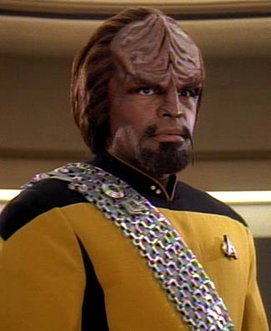
This week, I wanted to touch on an important related design issue that is very hard to do well, Non-Human PCs:


This isn't really a concern for my rule set, being Swords & Sorcery-themed and, unsurprisingly, humanocentric.  However, Non-Human PCs being believable are a concern for any RPG that incorporates High Fantasy and/or Science Fiction elements, which is a whole boatload of them- everything from D&D to Shadowrun to Star Wars.

Of course, what constitutes "believable" depends upon the level of immersion that the RPG purports to have.  For example, for B/X D&D's simplified rules set, where Demi-Humans are effectively the "multi-class option," as Race-as-Class mostly works.

However, for deeper levels of immersion, a lack of believability can be a problem for those who value verisimilitude.  As a world building task, it's quite hard work to develop a truly alien mind set, belief system, culture, history, etc.

Consequently, most RPGs (and other media) cut corners.  In High Fantasy, Non-Human species are typically the Tolkien standards, blatant Tolkien ripoffs or weird monocultures such as Scottish Dwarves.  Science Fiction is even worse, where most aliens are just Aliens with Forehead Ridges.


One of the few RPGs to do Non-Humans right is 2300 AD (originally titled Traveller: 2300, as the game as supposed to be a prequel to Traveller), from the genetically-engineered Pentapod to the vicious Kafers (a name based on the German word Käfer, meaning "beetle").  Culture, motivations and otherness are all done well and add to the aliens' strangeness.

The game is definitely worth a look to see how GDW handled the Non-Humans, as well as interesting relatively hard Science Fiction world building in general.  Except for having France be the reigning superpower, which shatters suspension of disbelief.


Being creative is hard, so the state of Non-Human PCs in RPGs is somewhat understandable.  However, sometimes avoidance is the best strategy (*cough*Swords & Sorcery*cough*).


Monday, July 9, 2018

RPG Game Play: Investigations

Over the years, as my tastes as a tabletop RPG GM have moved away from High Fantasy and toward Swords & Sorcery, my games have tended to become deadlier and more Old School for PCs.  Consequently, my games have also moved away from emphasizing combat and toward problem solving.  A type of problem solving that often comes up is Investigations.

So, this week, I wanted to take a look at Investigations in RPGs.


In terms of preparing an Investigation adventure, whether PCs are uncovering a conspiracy, solving a murder or finding a MacGuffin, the first thing to do as a GM is to have a firm grasp on the background and the details.  While preparation is always important for a GM, when running an Investigation adventure, it is even more so since there's a good chance that the Players will be coming up with ideas and approaches that you hadn't considered (despite that preparation) and you really need to keep the details in your head while thinking on your toes.

Whew!

Next, for a successful Investigation adventure, it really helps to have a gripping plot/scenario to grab and to hold the Players' interest.  Feel free to shamelessly rip off ideas from your favorite books, movies, TV shows... BUT do try to mix things up enough so that your Players don't realize what you are doing.  So, you want to be "Episode IV: A New Hope" (1977) (which took a LOT of ideas from "Hidden Fortress" (1958), the epic jidaigeki adventure film directed by the legendary Kurosawa Akira) and not this:


After you've worked out the plot/scenario for your Investigation, next you need to set up clues.  Lots and lots of clues.  Never underestimate the likelihood that the PCs will reach a dead end.  Thus, Justin Alexander's Three Clue Rule is a good general rule of thumb.  Furthermore, if the PCs are really stuck, consider dropping hints and even clues until they can get moving again.

Additionally, I like to also add interesting the NPCs and challenges that the PCs will face during the Investigation.  This isn't strictly necessary, but, for example, a great and engaging villain, such as Strahd von Zarovich can elevate a good adventure to a great one.


In terms of challenging the Players' minds, Investigations can be a great option if properly planned and executed.  And, as I mentioned above, they can fit in with a variety of genres.  So, if your band of murderhobos is tired of murdering their umpteenth tribe of green skins, consider throwing an Investigation at them.


Monday, May 28, 2018

TV Review: "Adventure Call" (2010-2013)

This week, I want to give a shout out to a hi*LAR*ious recurring sketch on "Limmy's Show!", "Adventure Call":


"Limmy's Show!" was a surreal and bizarre Scottish comedy sketch show broadcast on BBC Two Scotland, written and directed by Brian "Limmy" Limond.  In "Adventure Call," Limmy played Falconhoof, the host of a premium-rate call-in show, wherein callers attempted to work through a dungeon crawl similar to the all-time great text adventure game Zork, whilst being charged an exorbitant fee per minute.

The first thing that strikes most viewers is Falconhoof, who's dressed up like a Ren Faire reject.  He's quirky but plays it straight, and has to deal with all manner of strange and/or angry callers, which produces much of the humor.

Additional humor comes from the game itself, which is, like Zork, quite challenging, with players needing to say the right thing at the right time and featuring Permadeath!  Old School!

Here's my favorite sketch:


"Kill Jester."


Monday, April 16, 2018

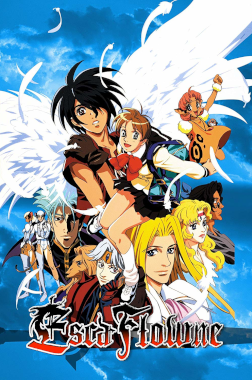
TV Review: "The Vision of Escaflowne (天空のエスカフローネ)" (1996)

This week, I wanted to give a shout out to an epic animated fantasy series that's one of the best of the 1990s, The Vision of Escaflowne:


"Was it all just a dream? Or maybe a vision?
No, it was real."

Set on both Earth and a fantasy world named Gaea, "The Vision of Escaflowne" follows the adventures of a teenage girl named Kanzaki Hitomi, who has a mystic connection to both places.  Whilst in the middle of professing her love for the high school track captain, Hitomi encounters Van, the teenage King of the small Gaean nation of Fanelia, and a dragon.

After defeating the dragon, Hitomi and Van are teleported back to Gaea, where Earth and the Moon are visible in the night sky and where Earth is called the Mystic Moon.  This is the first clue to the viewer that the series' has yet to be discovered backstory.

Shortly thereafter, Van uses the dragon's heart to power up the eponymous mecha Escaflowne, just as the Zaibach Empire invades his country.  Hitomi and Van are then swept up into Zaibach's conquest of the rest of Gaea, meeting a host of other characters along the way, including a jealous teenage catgirl.


It's a rather punishing game to have a drink every time Merle says, "Lord Vaaaaaan!"


Despite the bishōnen aesthetic of the male characters, "The Vision of Escaflowne" has a clever and well written story, with surprising depth and dramatic weight and some unexpected twists, without veering too much into melodrama.  Plus, there's a good balance between funny and poignant moments.  Additionally, the series successfully blends different genres (e.g., High Fantasy, Mecha, etc.) and puts its own distinctive spin on things.

Also notable are the wonderful soundtrack by Yoko Kanno and the Warsaw Philharmonic Orchestra and the eye popping visuals: this series is animation of a quality not previous seen before on a TV show.  The mecha design is top notch, including work from the legendary Kawamori Shōji of Macross fame.  There are also some pretty boss fight scenes.


A worldwide hit, "The Vision of Escaflowne" remains a beloved anime that is quite rewatchable more than 20 years later.  If you're looking for a fast-paced fantasy action anime filled with creativity, a wonderfully-fleshed out background and many well-designed characters, this may be for you!

Monday, January 29, 2018

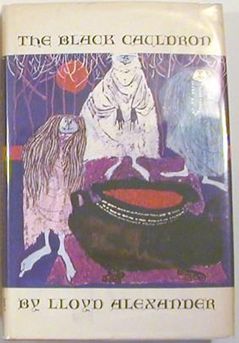
Literature Review: "The Black Cauldron" (1965)

This week, in honor of Lloyd Alexander's birthday on January 30th, I wanted to discuss the second book in my favorite fantasy series when I was growing up"The Black Cauldron" from "The Chronicles of Prydain":


taking place more than a year after "The Book of Three," "The Black Cauldron" continues the story of Taran the Assistant Pig-Keeper.

he's a little older and wiser but still gets constantly trolled by
Ellidyr, Prince of Pen-Llarcau,

Newbury Honor book

By "favorite," I mean that I liked the Chronicles of Prydain more than any other fantasy work in grade school, including the Lord of the Rings.  To me, it was far easier to relate to being an Assistant Pig-Keeper than a hobbit or a Dúnadan ranger.  Now than I'm older, I appreciate and respect LoTR better but Prydain will always have a dear place in my heart.

Speaking of both series, Messr Alexander has sometimes been accused of ripping off Professor Tolkien's Middle Earth works but, in fact, both Prydain and Middle Earth draw inspiration from a number of the same myths and folktales, most notably the Mabinogion.

"The Book of Three" begins with an orphan named Taran who is on the cusp of manhood and who yearns to become a great hero.  Unfortunately for him, he's stuck on a remote farm that's also home to his guardian, retired soldier Coll, and the great wizard Dalben.  Taran is rather full of youthful arrogance and more than a bit bratty and naïve, which sounds more than a bit like this guy:


While Taran is grousing and daydreaming, Coll puts him in charge of Hen Wen, the oracular white pig.  Unfortunately, that same day,  Hen Wen runs away, despite Taran's best efforts, because she is realizes she is being hunted by the Horned King, the war leader of the Dark Lord Arawn!

Taran heads after Hen Wen to try to get her back and runs smack dab into his hero, the High Prince Gwydion!  An unexpected adventure ensues and, on the way, he meets various companions, faces darkness and danger, encounters extraordinary beings and learns that "being a hero" is rather different from his daydreaming.

"The Book of Three" an epic story of the struggle against a Dark Lord but is also filled with understandable and memorable characters facing very human problems.  Like Ursula K. Le Guin's wonderful "Wizard of Earth Sea" (which I discussed last year), "The Book of Three" creates a brilliantly realized fantasy world yet the writing is also sophisticated and the characters are grounded.


Messr Alexander is able to retain the fairy tale elements whilst also giving us characters who feel pain and yearning.  The best and most touching part of the book, IMHO, is at the end when maturity begins to dawn upon Taran, who, when asked about what reward he would like, chooses to leave childish things behind and merely wishes to return home.


it is


Far be it from me to contradict Messr Alexander (the person who actually coined the phrase "High Fantasy"), but this tale isn't how I usually think about the term:
non-gritty low fantasy, I think - magic is rare and the main characters aren't super-heroic


The cauldron-born are indeed very memorable


first multi-part fantasy series that unfolded over a series of years

Here is the The Chronicles of Prydain segment from the excellent Lloyd Alexander documentary:

https://www.youtube.com/watch?v=sRQGPZt5Pc8


Monday, September 18, 2017

Movie Review: Willow (1988)

This week, I wanted to give a shout out to yet another film that I thought was totally awesome as a kid, but, with hindsight, doesn't look as shiny, George Lucas' foray into High Fantasy, Willow:


Willow has a somewhat meandering plot wherein a girl with a special birthmark is prophesied to bring about the downfall of the evil sorceress Queen Bavmorda.  Consequently, Bavmorda imprisons all the pregnant women in her realm.  Nevertheless, this baby Elora Danan, is born and smuggled to safety, eventually ending up in the care of our titular character, Willow Ufgood.

Willow is a simple farmer who dreams of becoming a sorcerer and is tasked with finding a safe place for Elora Danan.  Along the way, he meets rogue sellsword Madmartigan, a couple of brownies (who are the comic relief), Princess Sorcha (daughter of Queen Bavmorda, who does a heel-face turn) and Fin Raziel (a good sorceress polymorphed into a possum).  Also, armies clash, swashbuckling happens and dark sorcery must be averted!


Much like Star Wars, Willow is a mishmash of different ideas and inspirations, some of them painfully obvious in hindsight, such as Star Wars (Madmartigan is pretty much fantasy Han Solo) and the Lord of the Rings (the Nelwyns are pretty much Hobbits with the serial numbers filed off).  However unlike Star Wars, in Willow that mishmash never really comes together, unfortunately.

This film also suffers from an underwhelming performance from lead actor Warwick Davis, who fails to solidly anchor this ambitious project with his often hammy and wooden delivery.  And the tone of the film wildly swings from super kid-friendly to really grim dark.

Still, there are also plenty of positives.  Val Kilmer brings the necessary rock star qualities to Madmartigan and the rest of the cast is filled with good character actors.  The cinematography, action sequences, production design and costuming are good to excellent.  The VFX look dated now, but were good for the time.


So, if you are looking for an ambitious but flawed epic fantasy film that's still a fun romp, this might be up your alley!


Monday, May 29, 2017

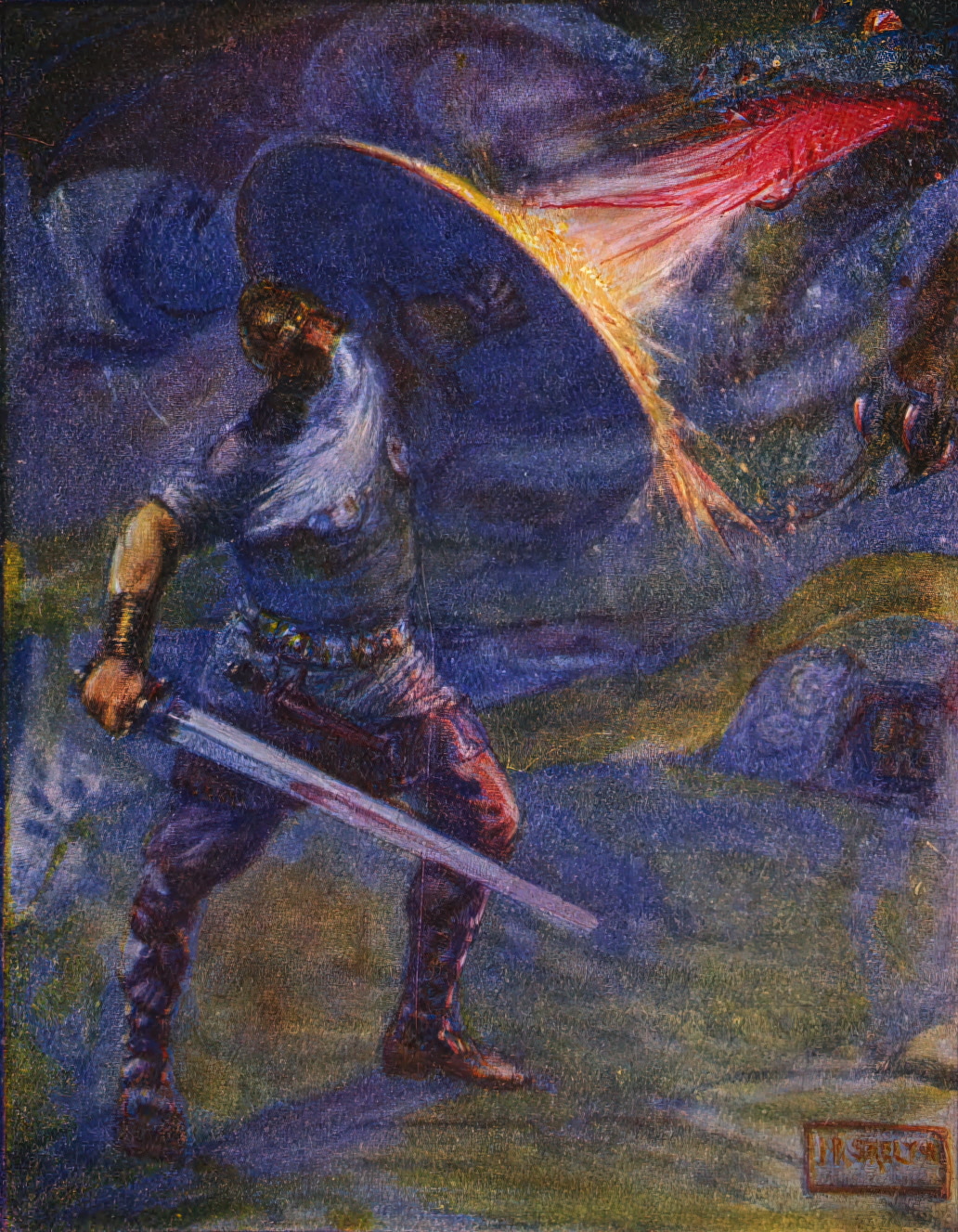
Literature Review: "Beowulf" (~1000)

This week, I want give a shout out to the greatest work of Old English literature, the epic poem about the legendary Scandinavian warrior king: "Beowulf":


"Beowulf" is a classic tale of the triumph of good over evil, whose titular character bravely faces monstrous foes time and again.  One of the earliest recognizable High Fantasy adventure yarns, in "Beowulf," our hero is a Geatish prince who sails to the aid of King Hrothgar of the Danes, whose realm is plagued by the monster Grendel.

Eschewing weapons because he wants a fair fight, Beowulf takes on Grendel hand-to-hand and rips off the poor bastard's arm!  Grendel flees and bleeds out.  Grendel's Mother seeks revenge, killing  Hrothgar's most loyal fighter, so our hero takes her out, as well.  Beowulf refuses kingship of the Danes and returns to his home, becoming king of his own people.  A half century later, a fearsome dragon threatens the kingdom and Beowulf, despite being an old man at this point, rides out for one last job.

Originally passed down through oral tradition, "Beowulf" was transcribed to manuscript form by an anonymous Anglo-Saxon poet, referred to by scholars as the "Beowulf poet".  Although the epic poem was actually written down sometime around 1000 AD, the action takes place throughout much of the 6th century.  The poem blends both fact and fiction for entertainment purposes, including actual people and events, such as the Battle on the Ice of Lake Vänern.


When I note that "Beowulf" is a "epic poem," I don't just mean that it is a poem that is epic, but rather "epic poem" is a literature term of art:

"a long narrative poem celebrating heroic deeds, and events significant to a culture or nation."

An epic poem, of course, requires an "epic hero": a brave and noble hero with superhuman abilities who embodies traits that are important to their culture.  Other epic heroes include Achilles and Roland.

A key figure in the literary analysis of "Beowulf" is none other than Oxford scholar J. R. R. Tolkien (who, of course, in his spare time wrote the definitive high fantasy works "The Hobbit" (1937) and "The Lord of the Rings" (1954)), who noted the epic poem's place in the cultural history of Britain.  This, in turn, helped to re-popularize this ancient yarn.


It's no surprise that the good professor was a fan of "Beowulf".  For example, Tolkien said that the Dragon in Beowulf is one of only two *true* dragons in all of literature - the other being Fafnir.  It's also no surprise that "Beowulf" was a source of inspiration for the good professor.  For example, the Dragon in Beowulf responds to the theft of one of its shinies by going on a murderous rampage throughout the countryside...  In addition, "Beowulf" continues to inspire adaptations and reinterpretations even a millennium later.

So, if you are a fan of adventure, High Fantasy or fantasy generally, Norse mythology and culture, or history generally, you owe it to yourself to check out the adventures of one of the first dragon slayers, Beowulf!

Monday, February 20, 2017

Literature Review: "The Book of Three" (1964)

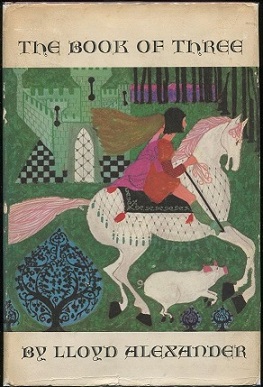
While this blog is primarily focused on Sword & Sorcery, I am carving out an exception for this most beloved of all High Fantasy and Young Adult works.  So, this week, in honor of Lloyd Alexander's birthday on January 30th, I wanted to discuss the first book in my favorite fantasy series when I was growing up, "The Book of Three" from "The Chronicles of Prydain":


By "favorite," I mean that I liked in grade school the Chronicles of Prydain more than any other fantasy work, including the Lord of the Rings.  To me, it was far easier to relate to being and empathize with an Assistant Pig-Keeper than a hobbit or a Dúnadan ranger.  Now than I'm older, I appreciate and respect LoTR better but Prydain will always have a dear place in my heart.

Speaking of both series, Messr Alexander has sometimes been accused of ripping off Professor Tolkien's Middle Earth works but, in fact, both Prydain and Middle Earth draw inspiration from a number of the same myths and folktales, most notably the Mabinogion.

"The Book of Three" begins with an orphan named Taran who is on the cusp of manhood and who yearns to become a great hero.  Unfortunately for him, he's stuck on a remote farm that's also home to his guardians, retired soldier Coll and the great wizard Dalben.  Taran is rather full of youthful arrogance and more than a bit bratty and naïve, which sounds more than a bit like this guy:


While Taran is grousing and daydreaming, Coll puts him in charge of Hen Wen, the oracular white pig.  Unfortunately, that same day,  Hen Wen runs away, despite Taran's best efforts, because she is realizes she is being hunted by the Horned King, the war leader of the Dark Lord Arawn!

Taran heads after Hen Wen to try to get her back and runs smack dab into his hero, the High Prince Gwydion!  An unexpected adventure ensues and, on the way, he meets various companions, faces darkness and danger, encounters extraordinary beings and learns that "being a hero" is rather different from his daydreaming.

"The Book of Three" an epic story of the struggle against a Dark Lord but is also filled with understandable and memorable characters facing very human problems.  Like Ursula K. Le Guin's wonderful "Wizard of Earth Sea" (which I discussed last year), "The Book of Three" creates a brilliantly realized fantasy world yet the writing is also sophisticated and the characters are grounded.

Messr Alexander is able to retain the fairy tale elements whilst also giving us characters who feel pain and yearning.  The best and most touching part of the book, IMHO, is at the end when maturity begins to dawn upon Taran, who, when asked about what reward he would like, chooses to leave childish things behind and merely wishes to return home.


For lovers of fantasy and young adult literature, "The Book of Three" and, indeed, the rest of the Chronicles of Prydain are must reads.  The Chronicles of Prydain was the first American fantasy work to win the respect of British critics and is arguably the first series of fantasy  novels.  It is also one of the first works of children's literature that presents an ongoing, multi-part story that unfolds over many years.

As a quick introduction, here is the The Chronicles of Prydain segment from the excellent recent Lloyd Alexander documentary: