Monday, February 6, 2017

Movie Review: "Detective Dee and the Mystery of the Phantom Flame" (2010)

[NB- this post is a slightly revised version of one that I published earlier]

春節快樂!

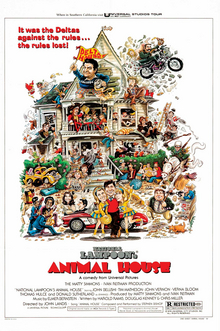
As we are in the midst of the 15 days to celebrate Chinese New Year (aka Spring Festival), I wanted to give some props to my favorite Chinese action mystery film, Detective Dee and the Mystery of the Phantom Flame:


Set in Tang Dynasty China, at the beginning of the reign of Wu Zetian (武則天), the first and only Chinese empress to rule in her own name, the country is rife with plots and intrigue against the throne.  After a couple of officials spontaneously combust (the titular flame), the Empress releases her old foe, former imperial magistrate and rebel Di Renjie (狄仁傑, the titular character), from prison and orders him to get to the bottom of this baffling mystery.  This, of course, is easier said than done, not only because of the tangled schemes of the Empress and other political factions, but also because Di's own assistants, Officer Shangguan Jing'er and Officer Pei Donglai, have interests that are not entirely aligned with the good detective's.  The result is an excellent series of twists and turns where you're not sure who's playing whom.

Like Guy Ritchie's excellent Sherlock Holmes films, to which it is often favorably compared, Detective Dee and the Mystery of the Phantom Flame is a multi-genre reimagining of a classic character, who in turn is based on the actual Di Renjie, a celebrated Chinese official.


Directed by the acclaimed Tsui Hark and with a large (by Hong Kong standards) budget, Detective Dee and the Mystery of the Phantom Flame is a lavish historical thriller that works as both a detective movie and a martial arts flick.  The set and costume design are gorgeous, while the story is breezy fun with just the right amounts of suspense, spookiness and mysticism.  And with the legendary Sammo Hung as action director, you know the fight choreography will be top notch.

Leading a stellar cast, the great Andy Lau plays the titular detective with intelligence, wit, and aplomb.  Furthermore, to prepare for his role in the film, Lau studied criminal psychology, which adds to the verisimilitude as Detective Dee conducts his investigation.  In addition, giving the detective a strong cast of characters to play against elevates the work: Detective Dee's verbal jousts with the Empress, played by Carina Lau, Andy's wife, in her first film role in four years, are some of the best scenes in the movie.


All in all, Detective Dee and the Mystery of the Phantom Flame is an excellent film.  If you would like to watch a Chinese martial arts film or historical drama with unexpected depth and superb execution, you could do a lot worse than this gem.

Movie Review: "Dragon Blade" (2015)

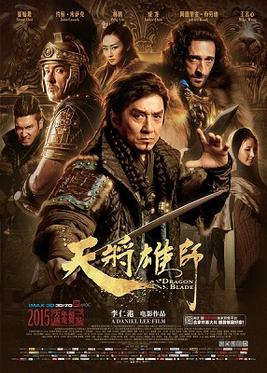
This week, as we are in the midst of the 15 days of celebration for Chinese New Year, I wanted to take a look at the entertainingly bad Chinese historical adventure film "Dragon Blade" (2015):


In this world, is the destiny of mankind controlled by some transcendental entity or law? Is it like the hand of God hovering above? At least it is true that man has no control; even over his own will.

This is a work of historical fiction, with a strong emphasis on "fiction".

no killing rule

childish

surprisingly no bad
twists and turns in the plot

Jackie Chan plays the captain of the Han Chinese government's Silk Road Protection Squad (even though there was no such thing), John Cusack plays the Roman general of the "Black Eagle Corps" (even though Roman military units were not organized into corps), and Adrien Brody plays the son of Marcus Licinius Crassus, who murders his father to become Consul of Rome (even though that's not how Crassus died or though Consul was not a heretitary position).

there are also many, many, many other liberties taken 

it's a Chinese imagining of Ancient Rome, like the portrayals of Native Americans in old westerns.


one of China's most expensive films

cheesy hammy overacted

terrible editing


And so begins this ripping yarn that masterfully combines an epic dark fantasy narrative, ridiculously awesome action and philosophical musings!  An adaptation of the best-selling manga with the same name, "Berserk" follows a young mercenary named Guts as he (literally) carves his way through a low fantasy world reminiscent of late medieval/early renaissance Europe.  This unfortunate place is plagued with constant warfare and endures a level of everyday violence and brutality that makes Westeros seem like Disneyland!

Confusingly, this anime starts with an episode in the manga's Black Swordsman arc then quickly shifts back to the manga's Golden Age arc, where Guts is recruited by the brilliant and charismatic leader of the Band of the Hawk mercenary group, Griffith.  The viewer follows the Band of the Hawk's rise to glory among various blood-soaked battlefields, while Griffith plays a devious and equally deadly game of political machinations.


In addition to enough blood and violence to trigger a moral panic, Beserk features an amazing soundtrack that, fittingly, highlights or underscores the narrative.  Furthermore, the narrative is filled with excellent character beats, such that even minor characters get some surprising depth.  This more than makes up for animation quality that is average, at best, for the time.

In the Golden Age arc, Guts and the Band of the Hawk face danger, betrayal and demonic shenangians at every turn.  Fortunately, Guts possesses effectively unlimited willpower, a zero [expletives] given attitude, and arguably the coolest sword of all time!  This sucker is so huge it makes a daiklave from Exalted look like a kid's toy!


Really, the only major flaw to "Berserk" (1997) is that it ends on an epic cliffhanger... which was addressed by the new series "Berserk" (2016) currently airing in Japan, that picks up immediately afterward!

Monday, January 30, 2017

RPG Design: Core Mechanic

新年快乐! (Happy Chinese New Year!)

This week, I wanted to talk about one of the most important parts of a tabletop RPG's design: the Core Mechanic.  By "Core Mechanic," I mean rules covering general task resolution (e.g., combat, investigation, negotiation, etc.) and reactions (e.g., surprise, morale, etc.), rather than related sub-systems (e.g., damage, initiative, etc.) or unrelated sub-systems (e.g., advancement, encumbrance, etc.).

Not a core mechanic

Any discussion of Core Mechanics should begin with the ur-RPG, Original Dungeons & Dragons (1974).  OD&D uses d20 target number roll under to determine hits in combat (the "Alternative Combat System" aka THAC0) and a collection of rules for reactions, such as d20 target number roll under (Saving Throws), d6 target number roll under (Surprise) and 2d6 look up (Monster Reactions).  Additionally, as mentioned before, there are simply no rules for large areas of task resolution, with each table addressing this situation in their own way through house rules and/or role-play (for some, this is a feature rather than a bug).

These gaps, however, begin to be filled in with Supplement I: Greyhawk (Thieves Skills use d100 target number roll under and d6 target number roll under, Open Doors uses d6 target number roll under) and by AD&D, include many wonky rules, such as Chance to Know Spell.

Having so many disparate rules is a drag, both figuratively and literally, since they consume large amounts of the DM's bandwidth and/or slow down the game with multiple look up charts.


Unsurprisingly, while D&D was becoming more complex, a number of other Old School RPGs chose the opposite approach with more streamlined rule sets, such as Traveller (1977, mostly 2d6 target number roll over) and RuneQuest (1978, mostly d100 target number roll under).  This more simplified design approach has won out, with most New School RPGs employing a universal Core Mechanic, most notably 3e and newer D&D (d20 target number roll over).

I've spent a fair bit of time grumbling about various aspects of New School RPGs, but this is one area that I feel is a definite improvement than back in the Ye Goode Olde Days.  By streamlining the Core Mechanic (and often other parts of the rules set as well),  gameplay speeds up and GMs can focus on more rewarding parts of the game.


...and we liked it!

For Sorcery & Steel, my rules set, I've adopted a universal Core Mechanic (d20 target number roll under) to steamline play while not stepping too far away from its Old School D&D roots (descending AC).  While starting as a set of AD&D house rules, Sorcery & Steel has become its own thing.  However, I want to keep its DNA recognizable while fulfilling my other design goals.

Monday, January 23, 2017

Literature Review: "Beyond the Black River" (1935)

This week, in honor of R.E. Howard's birthday on January 22nd, I wanted to discuss one of my favorite Swords & Sorcery yarns, the classic Conan the Barbarian tale "Beyond the Black River":


Although a ripping Sword & Sorcery tale (with gory action, savage imagery and fell magic), "Beyond the Black River" is also unusual and noteworthy for a Conan story in a number of ways.

Firstly, the viewpoint character for much of this tale is a young man named Balthus (likely the author's self-insert) who has travelled to the very edge of the civilized world to seek his fortune rather than everyone's favorite Cimmerian murder machine.  This allows us to see Conan from a somewhat different perspective.  Anyway, unfortunately, this is the worst possible time to visit Conajohara, the newest province of the Kingdom of Aquilonia carved out of the lands of the Picts, since an irate sorcerer named Zogar Sag is uniting thousands of Pictish warriors to wreak bloody vengeance!

Taking along his new sidekick, Conan discusses the rapidly deteriorating situation with Governor Valannus, and Valannus decides their own hope is to find the sorcerer in the jungle beyond the Black River and terminate him with extreme prejudice.  Accompanied by a dozen handpicked rangers, Conan and Balthus head off on their kill mission into the heart of darkness to prevent an apocalypse now.

As in Francis Ford Coppola's acclaimed retelling of Joseph Conrad's acclaimed novella, the plan quickly goes off the rails for Conan and Co, and young Balthus finds himself fighting for his life!

Much death and mayhem ensues.


“Civilization is unnatural. It is the whim of circumstance. And barbarism must ultimately triumph.”

One of the major themes of Conan's tales, the struggle between civilization and barbarism, is front and center in "Beyond the Black River."  Indeed, it drives the action since the two are in actual direct conflict.  However, there's a philosophical level as well: This is an unusually moody and reflective Conan story and the normally taciturn barbarian waxes at length about on the topic.    

For example, in his opinion, this latest Aquilonian land grab is dangerous and foolhearty and the barbarian explains to Balthus, "you Hyborians have expanded as far as you'll be allowed to expand."  There are signs of impending disaster, just like Aquilonia's last attempt to colonize barbarian lands, the southern marches of Cimmerian.

In another unusual move, Conan also reveals something of his past, that he was one of the reavers that sacked the fort-town Venarium, even though he hadn't reached 15 winters.  Testosterone practically oozes from the pages.


Another interesting point about "Beyond the Black River" is how much it resembles tale of the Old West, another great love of Messr Howard.  In fact, remove sorcerer Zogar Sag and the other supernatural elements and this story reads much like Howard's westerns, with the Picts standing in for Native Americans.

All in all, "Beyond the Black River" is one of Messr Howard's finest works, filled with both classic pulp action and melancholy philosophical ruminations.  It provides arguably the clearest picture of Conan, both in thought and in action.   Every fan of Swords & Sorcery should take a look!

Monday, January 16, 2017

RPG Design: Gear

Two weeks ago, I discussed the tracking of a PC's gear and any resulting effects (Encumbrance), and this week, I wanted to followup and talk about gear itself in tabletop RPGs.

Gear is, unsurprisingly, a key part of many tabletop RPGs.  I've always enjoyed the mini-game of kitting out a PC.  It's an early opportunity to place your stamp on a PC.  Even when there isn't a mechanical difference between various types of equipment, choices can convey a different feel for roleplaying purposes, such as wielding an axe versus a sword.

Attribution: Dewfooter

Some games also expect that a not inconsiderable portion of a PC's power comes from their equipment.  For example, in Original Dungeons & Dragons, a game where a single hit from any weapon can kill any 1st level character except a Fighting Man who rolled max hit points, an often early priority for the party is getting their frontline into plate armor, which greatly increases survivability.

However, equipment is also important not only because of its actual utility during the game, but also because it can be an important part of shaping your character and your play style.

In newer editions of D&D, as well as other designs, have altered this assumption by placing an increased emphasis on a PC's internal power (e.g., feats, prestige classes, etc.), leading to a lesser role for gear.  This, in turn, led to more advanced planning and character design for these PCs (e.g., feat chains, feat combos, etc.), sometimes many levels in advance.

On the other hand, in the Old School play style, story is usually emergent in response to actual play, rather subject to advanced planning, and discovery of new gear is no exception.  An interesting example of this is one of my favorite RPG stories, "Gimli of Arabia": a dwarf fighter in a 1e AD&D game happens across a +3 scimitar during a desert adventure.  He decides to use the powerful weapon despite not being proficient or optimized for such and unexpectedly ends up "going native."
Khazm was an otherwise bog-standard fighter, but adopting an atypical weapon and unusual cultural trappings for his race made him effectively unique in the game-world - this was the days before every demihuman race had an ice subrace and a sea subrace and a desert subrace and a jungle subrace, of course. It didn't take class abilities or feats or prestige classes to make him distinctive - the only rules-wise change to Khazm was spending a weapon proficiency slot on the scimitar after he leveled up - but rather I simply roleplayed him in ways, and surrounded him with trappings, which reflected his adopted culture.

What could possibly go wrong?

Equipment is also important as a form of treasure, especially magic equipment.  Even in games such as OD&D, where GP = XP, there's just something immensely satisfying to finding a PC's first magic weapon in a way that no hoard of gold or jewels can match.

In terms of RPG design and selecting what to include for equipment, many games have extensive equipment lists and some even have entire sourcebooks dedicated to gear, such as this classic:


For Sorcery & Steel, my rules set, I prefer not to have enormous lists of various items, which is a step away from its Old School D&D roots.  This is mainly because, as I've mentioned before, I want to keep bookkeeping limited and to streamline game play.  For example, inspired by the Lone Wolf gamebooks, there are a relatively limited number of weapons, just enough to provide reasonable variety.

But no pole arms.

Monday, January 9, 2017

Board Game Review: "Xiangqi (象棋)" (~1200)

This week, I want give a shout out to one of the most venerable and respected board games and war games of all time: "Xiangqi (Chinese: 象棋; pinyin: xiàngqí), also called Chinese chess":

Attribution: Daniel Danzer

Similar to Chess, Xiangqi is a two player board game wherein each player controls an army of 16 pieces of various types and attempts to checkmate the opponent's General, whilst preventing the opponent from doing the same.  The battlefield consists of a 9 x 10 board with a terrain feature, a river in the middle of the board that is impassible to certain pieces, thus dividing your army into offensive and defensive forces.  The other board features are the palaces (or command tents) of the armies (colored in green and red in the photo above), which restrict the movement of the Generals and the Advisors.

Like Chess, in Xiangqi each faces the other from opposite sides of the board but unlike Chess pieces which are placed within the squares, Xiangqi pieces are placed on the intersection of the lines.

Each army, represented as discs with Chinese characters, consists of:
  • 1 General (labelled 將 (trad.) / 将 (simp.) on the black side and 帥 (trad.) / 帅 (simp.) on the red side). 
  • 2 Advisors (labelled 士 for Black and 仕 for Red).  
  • 2 Elephants (labeled 象 for Black and 相 for Red). 
  • 2 Horses (labelled 馬 Black and 傌 for Red).
  • 2 Chariots (labelled 車 (trad.) / 车 (simp.) for Black and 俥 (trad.) / 车 (simp.) for Red).  The chariot is sometimes called the rook by English-speaking players, since it is functionally identical to the rook in Chess. 
  • 2 Cannons (labelled 砲 for Black and 炮 for Red).
  • 5 Soldiers (labelled 卒 for Black and 兵 for Red). 


Although Xiangqi developed over a number of centuries, earliest references to the current version of the game come from around 1200 (e.g., a poem by Liu Kechuang (刘克庄), entitled <<象弈一首,呈叶潜仲>>).  Although overall complexity is similar to the Game of Kings, Xiangqi's gameplay and tactics are sometimes similar to Chess (e.g., forks, pins, and skewers are possible) but sometimes different.  For example, while the Horse and the Knight have similar moves (an orthogonal move followed by a diagonal move), it is possible to block a Horse (i.e., unlike the Knight, the Horse cannot leap over a piece).

In addition, unlike Chess, where the armies occupy the back two ranks of the board (and, indeed, one of the goals of the Development phase in Chess is to "bring your army on to the battlefield"), in Xiangqi, your Soldiers and Cannons are already forward deployed into a skirmish line.  This more likely earlier enemy contact, as well as greater long range orthogonal striking power, earlier promotion of Soldiers v. Pawns, and the restricted movement of the General often makes for an faster paced game than Chess.

Attribution: Peter Griffin

One of the most popular games in China and other parts of Asia, Xiangqi has developed a following in many parts of the world.  Like Chess, Xiangqi is an all-ages game that teaches strategy, patience, forethought and resourcefulness.  The rules are fairly easy to learn but the terrain and the different  nature of the various pieces add depth and complexity.  All in all, it's a fun and challenging game enjoyed by millions everyday.

Any fan of board games and war games owes it to themselves to take a look!

Monday, January 2, 2017

RPG Design: Encumbrance

Happy New Year!

This week, I wanted to talk about an interesting, but often poorly handled or ignored, game design decision for tabletop RPGs: Encumbrance.

Ask about my encumbrance score and I'll put you on the 'Naughty' list!

Encumbrance (aka a PC's carrying capacity) has existed in tabletop role-playing games since the beginning of the hobby.  Since resource management was a key element of gameplay for Original Dungeons & Dragons, Encumbrance became another thing to track during a session, along with spells, torches, food, etc.

However, it can be cumbersome (pun intended), to actually calculate the sum of all of a PC's items and THEN calculate derived in-game effects *EVERY* time there's a change in a PC's inventory, Encumbrance is often hand waved away, especially since most players are more interesting in adventuring than bookkeeping.  On the other hand,  ignoring Encumbrance can lead to disbelief breaking situations, even with well-meaning players, where characters are carrying a ridiculous amount of items and, thus, shatter verisimilitude.

Seriously, GM should occasionally make a surprise check of their PCs' inventories.  Sometimes it's literally jaw-dropping.

Nevertheless, when Encumbrance is done well, it can force some interesting decisions or challenges upon players because of changes to character speed, abilities, etc.    I've also mentioned before that I've been fortunate enough to 1e Advanced Dungeons & Dragons  with a GM who runs the game by the book, including Encumbrance.  Enforcing Reaction and Initiative penalties for Encumbrance forces interesting and sometimes tough decisions on a player.  For example, my elven Magic-User/Thief has 18 Dexterity but only 9 Strength.  To avoid Reaction and Initiative penalties (spell books are heavy!), I couldn't carry a full complement of weapons.

Old School!


I've mentioned before that I've become increasingly lazy as a GM over time.  One way that this trend has influenced the design of my rules set, Sorcery & Steel, is that I've endeavored to remove as much accounting from the system as possible.  This is in line with one of my stated design goals, simplicity.  However, too much simplicity in a rules set can shatter verisimilitude, which is another stated design goal.

In this balancing act between these two goals, I decided to use Encumbrance but in a simplified fashion: players need to list items by location and the character sheet needs to pass the smell test.


In other words, if a character is carrying two swords, a bow, three daggers, standard adventuring gear, and several bags of loot, the player needs to explain where all these are located and convincingly argue why the character doesn't suffer a penalty.